New CLI user
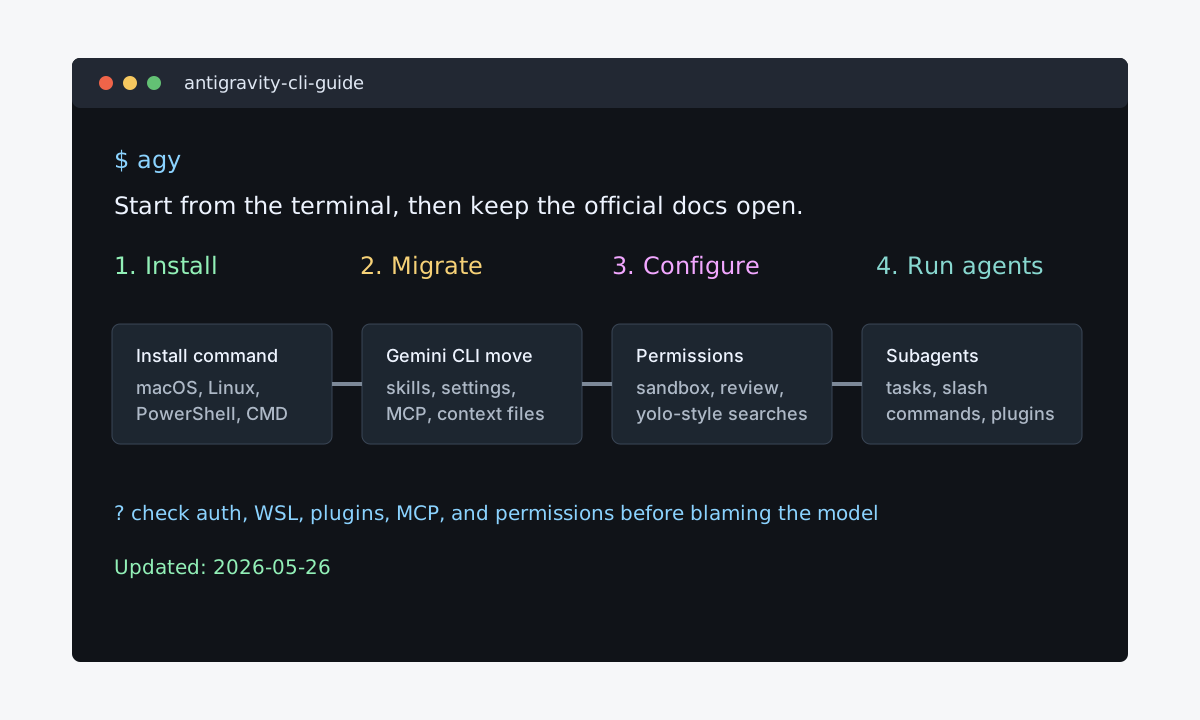
Start from the Google-owned Antigravity page for your operating system, authenticate with Google Sign-In, then use a simple project prompt to verify the CLI works.
Open install guideMain keyword: antigravity cli
Install Antigravity CLI safely, understand the Gemini CLI transition, and find the right page for commands, yolo-style permission searches, Antigravity 2.0 differences, and troubleshooting.
Updated on 2026-05-27. Independent guide. Use official Google links for downloads and account actions.
Not affiliated with Google. No binaries, mirrors, login forms, or copied install commands are hosted here.
Official-source checklist
This independent guide does not host installers, mirror packages, or provide copy-and-run install commands. Open Google's official Antigravity page and copy commands only from that domain.
antigravity.google or another Google-owned domain.Use the Google Antigravity download and CLI documentation pages for downloads, authentication, account actions, and current command text.
Open Google official pageAfter installation, authenticate through Google's flow, inspect /permissions, and test in a disposable folder first.
Antigravity CLI is the terminal-first surface for Google Antigravity agents. The search intent behind antigravity cli is not a simple definition query: most searchers need to install it, understand what changed from Gemini CLI, and decide whether the command line or the Antigravity 2.0 desktop app fits their workflow.
Google describes the CLI as a lightweight terminal UI that brings the same core agentic capabilities as Antigravity 2.0 into a keyboard-centric workflow. That makes this guide useful for developers who work over SSH, prefer terminal sessions, or want low-overhead access to agent tasks without opening the desktop interface.
Start from the Google-owned Antigravity page for your operating system, authenticate with Google Sign-In, then use a simple project prompt to verify the CLI works.
Open install guideCheck the transition date, import settings where supported, review skills and MCP configuration, and test core commands before relying on the new CLI for production work.
Open migration guideLearn slash commands, permissions, yolo-style searches, configuration files, and troubleshooting patterns for remote sessions or agent-heavy workflows.
Open command referenceUse this when the question is not installation, but whether the new CLI keeps the Gemini CLI workflows you depended on.
Compare the CLIsFind the new MCP config location, OAuth token behavior, and migration checks before assuming your Gemini CLI servers broke.
Open MCP guideRemote, WSL, and headless sessions often fail because auth opens in the wrong place. Start with the authorization flow.
Fix WSL authSeparate account access, plan limits, model limits, and CLI session issues before reinstalling or changing plans.
Check rate limitsDiagnose shell, PATH, terminal restart, and Windows command issues before reinstalling the CLI.
Fix command not foundCheck the official installer, preserve config, and verify the CLI after an update without deleting useful migration state.
Open update guideSeparate account selection, browser handoff, tokens, WSL, and MCP OAuth so users know which auth flow is failing.
Fix OAuth sign-inUse the CLI over SSH or in a remote terminal without mixing up local browser auth, project paths, and permissions.
Open SSH guideMove Gemini CLI skills, extensions, hooks, and plugin expectations into the Antigravity CLI model carefully.
Open skills guide| Surface | Best for | First action |
|---|---|---|
| Antigravity CLI | Terminal-first coding, SSH workflows, quick agent tasks, low resource overhead. | Install the CLI, sign in, run a small prompt, then tune permissions. |
| Antigravity 2.0 | Visual orchestration, project management, multiple agents, reviews, artifacts, and desktop-first workflows. | Install the desktop app, create a project, add folders, and start an agent. |
| Antigravity IDE | Editor-centric coding with familiar IDE interactions and agent features inside the workspace. | Use the official download page and decide whether to keep or replace older installs. |
/config, /permissions, and ? to understand what the CLI can do before changing autonomy settings.Sources: official Google Antigravity product pages, Google Antigravity CLI documentation, and the Google Developers transition announcement. This site is an independent guide and is not affiliated with Google.
No. Google says Gemini CLI is transitioning for individual and free users, while Antigravity CLI is the new terminal surface inside the Antigravity platform. Enterprise access has separate rules.
No. Use the official Google Antigravity download page. This site does not host binaries, mirrors, login forms, or copied installer commands.
A guide hub with safe install checks, migration notes, yolo mode safety context, command references, and troubleshooting pages.